

The War Tax: What the Iran Conflict Is Costing Your Trip to Europe
As the war in Iran continues to drag on and on, things are getting dicey for European fuel access, and airlines are passing that dicey-ness on to you, the consumer. I dive in to the ins and outs of fuel surcharges, sky holes, and more to help prepare you for this year’s European vacation.
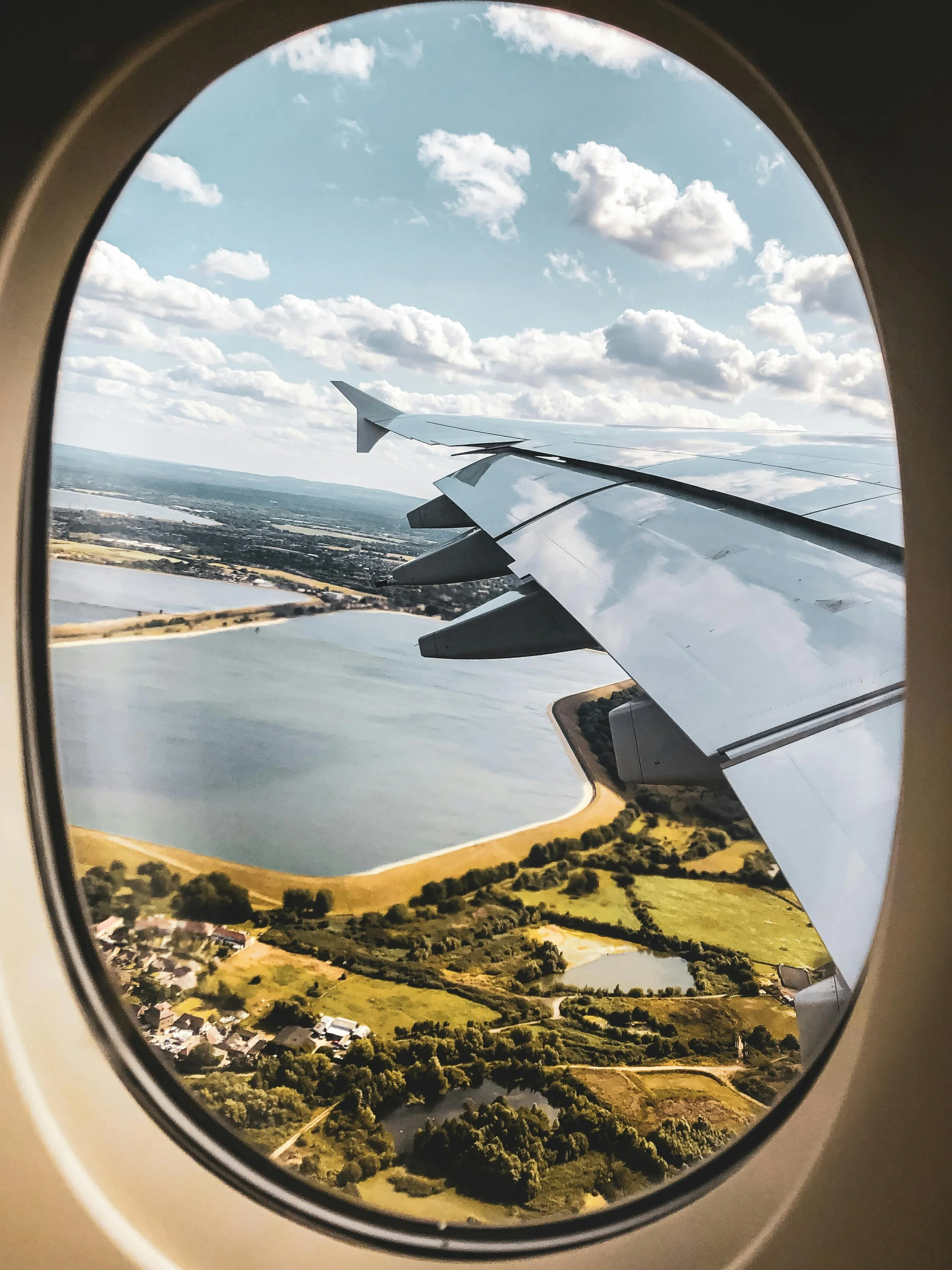
So you read my piece from early March about whether Europe is safe right now (short answer: yes, go, stop panicking), and now you're asking the follow-up question, which is: okay but is it going to cost me more? And the answer is... kind of, yeah. But it's more complicated than the headlines and panicked fellow travelers are making it sound.
The fuel situation
When the U.S. and Israel launched strikes against Iran on February 28th, oil prices went absolutely sideways. Jet fuel, which was running around $2.50 a gallon before the conflict started, shot up to nearly $4 a gallon almost immediately. Where I live, I’m looking at over $5 a gallon and rising. Crude oil hit over $100 a barrel for the first time in years. Airlines were not thrilled about this, as you can imagine, since fuel is typically their second-biggest operating expense after paying the people who actually fly the planes.
So yes, some airlines have already raised prices. Qantas, SAS, Air New Zealand, and Air France-KLM have all either hiked fares or added fuel surcharges on international routes since the conflict began. And there will almost certainly be more to follow. One travel industry expert I came across put it pretty bluntly: airlines can't legally collude to raise prices together, but they're all dealing with the same market forces, so don't be surprised when they all independently "decide" to raise fares at roughly the same time and cite the same reason for it. She called it "excuseflation.”
Fuel surcharges
European carriers in particular love to break their ticket prices into two parts: the base fare, and the fuel surcharge. They're both in the total price you pay, but they show up as separate line items. This matters because if you're redeeming frequent flyer miles for a transatlantic flight, you often only pay the base fare in miles, and then the fuel surcharge gets tacked on in cash. That surcharge, not surprisingly, has gone up considerably since the war started.
To give you a concrete example: a business class ticket from San Francisco to London was recently running around $6,300 total, with the base fare portion at $3,300 and the fuel surcharge at about $2,555 — up roughly $400 since February. So if you were planning to use miles for a transatlantic trip, you haven't necessarily escaped the war-related price increases just because you're not paying for the ticket itself. Check your total out-of-pocket cost including surcharges before you assume you're getting a deal.
(This does NOT work the same way for flights to Asia, where carriers structure their pricing completely differently and fuel surcharges are much lower. For Europe though, this is very much a thing.)
The airspace problem
As you may have guess, there is also now a massive hole in the sky over the Middle East, and it's affecting flight routes globally. This has already been happening in the skies over Ukraine since the Russians invaded them a few years ago.
Airspace over Iran, Iraq, the UAE, Qatar, Bahrain, and surrounding areas has been either fully closed or heavily restricted since the war began. This is actually a huge deal because that corridor is one of the busiest in the world, especially for flights between Europe and Asia. Airlines that used to route through it are now flying significantly longer paths, burning more fuel, and in some cases cutting flights entirely because the economics stopped making sense.
For Americans flying direct to Western Europe on a U.S. carrier — your standard New York to Rome or Seattle to Amsterdam kind of trip — this probably doesn't affect your route much. You're going over the Atlantic and that airspace is fine. BUT if your itinerary connects through Dubai, Doha, Abu Dhabi, or any other Middle Eastern hub, please go check your booking right now. Turkish Airlines already canceled service to a bunch of regional destinations. Other carriers have done the same. If you have a connection through the Middle East and nobody has contacted you yet, call your airline and ask specifically whether your routing is still operating as booked.
So what is this actually costing?
Estimates I've seen put the war-related impact on spring airfares at around 10-15% above where they were before February 28th, with summer 2026 fares tracking potentially 18% higher than last summer. That's not nothing, especially layered on top of a dollar that's already down 10-12% against the euro since last year. If you haven't booked your flights yet and you're planning a summer trip, you are getting hit from both directions simultaneously and I am so sorry about that.
The good news, such as it is: if you already have tickets that you bought before the war started, your price is locked in. Surcharges only apply to new bookings. So if you're already ticketed, you are fine on that front.
What should you actually do?
Book sooner rather than later. Every week this conflict continues is another week of potential surcharge increases, and the longer fuel prices stay elevated, the more airlines will feel justified in passing those costs along. It’s true that you could follow this advice and fuel costs could drop tomorrow, or you could wait and fuel costs could continue to rise and price you out completely. The way this war is going, I would bet on the ladder rather than the former. If you can afford it now, I would book now.
If you're planning to use miles for a transatlantic flight, do the math carefully on the total out-of-pocket cost including fuel surcharges before you commit. In some cases right now, paid economy is actually coming out cheaper than "free" business class once you factor in what you're paying in surcharges plus the miles you're spending.
If your itinerary touches the Middle East at any point, call your airline and confirm your routing is still intact.
Keep an eye on the situation overall, because if the conflict de-escalates, fuel prices should ease and airlines will eventually follow, though probably not as fast as you'd like. The Straight of Hormuz, where so much of the oil Europe uses has to pass through, continues to be a sticking point, and the restrictions will take a while to rectify if/when tensions ease in the region.
The bottom line is: getting to Europe is costing more than it was six months ago, for a combination of reasons that are all happening at the same time and none of them are particularly fun. But Europe is still there, it is still magnificent, and it is not telling you not to come. It's just going to cost you a little more to get there than you maybe planned for.
2,000 Years of History vs Your Bags: Europe’s New Rules on Wheeled Luggage
Europe has been quietly (and in some cases loudly) cracking down on wheeled luggage in historic city centers. I break down what's real, what's rumor, and what you should actually do with your luggage so you don't start your dream trip with a fine and a very judgmental Italian police officer.
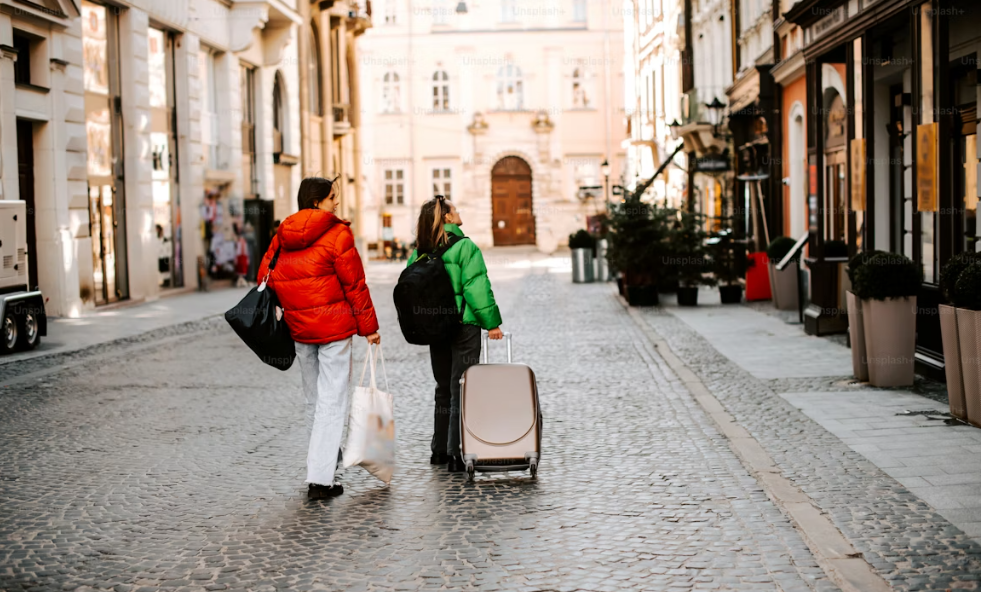
There is a very particular sound that every resident of Venice, Dubrovnik, Rome, and approximately 47 other European cities with cobblestone streets has come to absolutely despise. You know the sound. It's the sound of a wheelie suitcase being dragged across ancient stone at 6am. Clack clack clack clack clack. Into the echo chamber of a centuries-old alley. Clack clack clack clack clack. Past the windows of people who are trying to sleep and/or preserve their will to live.
Friends, Europe is OVER it.
I mean, can you blame them? These are streets that have survived the fall of the Roman Empire, the Black Plague, two World Wars, and roughly 800 years of extremely questionable political decisions. And now they're being slowly destroyed by some tourist dragging a 28-inch hardshell full of backup shoes across them at dawn. Make it stooooop omg.
Over the past couple of years, a handful of cities have started introducing actual rules… and in some cases actual fines… around wheeled luggage in their historic centers. Some of the headlines have been wildly overblown (we'll get to that, Dubrovnik), but some of them are genuinely true and worth knowing before you show up to the Spanish Steps with your giant spinner and a one-way ticket to a €400 fine and a very judgmental Italian police officer.
Here is the actual situation, city by city.
ROME: The One That's Very Much Real
Let's start with the one that is 100%, no-hyperbole, actually enforced: Rome.
Dragging a wheeled suitcase down the Spanish Steps is now officially illegal under Rome's urban decorum laws. The fine starts at €250 and can climb to €400 or more if there's evidence of damage. And the police actively patrol the Steps and surrounding tourist hotspots throughout the day, so this isn't one of those rules that exists on paper while everyone looks the other way. They are watching… they are waiting… and they have seen this movie before.
Why? Because the marble that has stood for centuries cannot handle the cumulative impact of millions of suitcase wheels grinding across it each year. Even the vibration from bouncing a bag down the steps causes microscopic damage that adds up over time. So before you think how bad can it really be, just know that you and your luggage are the ten thousandth person to think that exact thought, and the marble has had enough.
What to do instead: Don’t try to maximize your sightseeing as soon as you get into town or until the last possible second before you leave town. Plan appropriately and head straight to your accommodation or use a luggage storage service first (there are several excellent options near Termini Station and throughout the center), or ask your hotel/short-term rental to store your bags before you leave. Drop your stuff, take a breath, change your shirt, then go be a tourist. The Spanish Steps will still be there in an hour, I promise.
FLORENCE: No Law Yet, But They're Watching You
Florence has not passed a specific wheeled luggage law. What it does have are standard noise and public order ordinances that can absolutely be invoked against someone making a racket through a residential neighborhood at dawn. And the city has been on a broader mission to calm its historic center… banning those tourist golf carts and tuk tuks, tightening rental rules, and generally attempting to preserve the quality of life of people who actually live amongst the Botticelli.
Dragging or bouncing bags near historic monuments has been addressed under general preservation rules. Soft wheels attract dramatically fewer side-eyes. And while the main streets between Santa Maria Novella and the historic center are wide enough and smooth enough that a rolling bag isn't a crisis, just don't be the person making the racket at sunrise. I used to stay at a pensione on a cobbled side street right near Santa Maria Novella and let me tell you, wheelie bags and luggage carts from the hotel across the street woke me up from a deep sleep at 4am on more than one occasion.
What to do instead: Taxi from the station, go straight to your hotel, drop your bags, and then go fall in love with Florence. It works out much better this way trrrrust me.
VENICE: The Ban That Wasn't (But Also Kind Of Is, Spiritually)
Okay, this one is complicated, and the internet has been completely unhinged about it for a decade.
Here's what's true: In 2014, reports spread that Venice was going to fine tourists hundreds of dollars for dragging luggage across its fragile bridges and marble steps. The story went viral, everyone panicked, travel forums erupted, and then the city commissioner's office clarified that the proposed regulation applied to commercial carts, not personal luggage. No formal citywide ban on tourist luggage was ever passed. Everyone calmed down. And then the rumor started again. And then again. And here we are.
Here's what's also true: Large trolleys and commercial carts are restricted on certain routes and near water bus stops. And while you can technically roll your bag around Venice legally, doing so loudly over stone bridges at 6am will earn you the kind of looks that cannot be described in a family-friendly travel article. Venetians have already had it up to HERE with tourists (see: the fight to ban cruise ships from the city center and the day tripper entrance fee), so it’s best not to ruffle any more feathers than absolutely necessary.
Also, practically speaking, Venice will handle this problem for you. The city is a magnificent, bewildering labyrinth of narrow calli, stone staircases, and humpback bridges. A giant hardshell suitcase in Venice isn't just annoying, it's a full comedic situation. You will get stuck. You will block a bridge. A local will sigh at you in Italian. It will not be your best moment.
What to do instead: Book a water taxi from the airport or train station directly to your accommodation. Many hotels and canal-side apartments will arrange luggage collection. Or use a luggage transfer service and arrive looking like someone who has traveled before.
PORTOFINO: Small Town, Big Fines, Zero Patience
Portofino is tiny. Like, actually tiny… a few hundred residents, one perfect little piazzetta, and a harbor full of boats that cost more than most people's houses. It is also, inexplicably, a place that an enormous number of tourists decide they must visit, all at the same time, with all of their luggage.
A local municipal regulation now explicitly targets tourists who linger in congested areas with bulky luggage during peak times. Fines can reach up to €500 for blocking the narrow lanes and harbor front. The message to day-trippers arriving by boat is pretty blunt: carry your bag, keep moving, and under no circumstances park your giant trolley in the middle of the harbor piazza and start taking photos of it like it's a character in your vacation story.
What to do instead: Pack light for a day trip to Portofino… like, actually light. Or leave your bags at your hotel in Santa Margherita Ligure, the nearby town where most people stay, and just hop over unburdened and fancy-free.
DUBROVNIK: Mostly Just Vibes (And A Very Pointed Video)
Dubrovnik's Old Town is a UNESCO World Heritage Site and one of the most jaw-dropping medieval walled cities in existence. It is also visited by an absolutely staggering number of tourists… something like 289,000 in just the first half of 2023, compared to a full-time resident population of around 41,000. Those residents are, shall we say, all up in their feelings about it.
Reports spread that Dubrovnik was fining tourists for rolling suitcases through the Old Town. The city government issued a firm denial. No formal ban, no suitcase-specific fines… at least not yet. What does exist is the Respect the City campaign, which asks visitors to move quietly and carry their bags rather than dragging them. The city even made a little animated video about it, which is honestly a very polite way of saying please for the love of everything stop doing this.
The limestone of Dubrovnik's Old Town is genuinely special, and genuinely, spectacularly loud. The clatter of plastic wheels echoing through those tunnels at all hours has been driving residents absolutely bananas, and honestly, fair enough.
What to do instead: Use the luggage drop services at the Pile or Ploče Gates before entering the Old Town, or just pick your bag up and carry it for five minutes. You can do it! I believe in you.
HYDRA, GREECE: The Whole Nine Yards
Hydra said forget it and banned motorized vehicles from the entire island entirely. No cars, no scooters, no bikes. Streets are staircases and stone paths. Getting around means walking, taking a water taxi, or, and I cannot stress this enough, a donkey.
Rolling luggage is not just discouraged on Hydra, it is functionally impossible in large portions of the island. Hotels arrange porters, sometimes with actual pack animals, for heavy loads. If you show up with a giant hard-shell spinner, you will have a genuinely terrible time and you will have earned it.
What to do instead: Pack a backpack or soft duffel for any trip to Hydra. Leave the spinner home. This is just non-negotiable.
SO WHAT DOES THIS ALL MEAN FOR YOU?
There is no Europe-wide ban on wheeled luggage. But cities are increasingly using noise ordinances, preservation laws, and public order regulations to push back on the very specific chaos caused by millions of hard-shell suitcases clattering through streets that predate the concept of luggage by about five hundred years.
The rules that are genuinely enforced with actual fines right now:
Rome: No rolling bags down the Spanish Steps. €250–€400+ fine.
Portofino: No loitering in congested areas with bulky luggage. Up to €500 fine.
Venice: Restrictions on large commercial carts on certain routes.
Everything else is varying degrees of official side-eye, awareness campaigns, and the very credible threat of future enforcement.
The smart play… and good travel etiquette regardless of any law… is to go straight to your hotel or a luggage storage service when you arrive, and leave the big bag behind when you're sightseeing. Consider soft rubber wheels or a convertible backpack hybrid for European trips. And for the love of all that is beautiful and ancient and should not have to suffer any further indignities, do not drag hard plastic wheels across cobblestones at 6 in the morning, I am literally begging you.
The clack clack clack will follow you. Not in the form of a fine, but in the form of the slow, disappointed gaze of an entire continent that has simply had enough.
You don't want that. Trust me on this one.
The War in Iran: What it Means for Your Trip to Europe
The U.S. launched military operations against Iran on February 28th, and the ripple effects on global travel have been significant. If you have a trip to Europe on the books and you're not sure what to do, we've broken down exactly what's happening, what it means for Western Europe and Türkiye specifically, and what you should be watching right now.
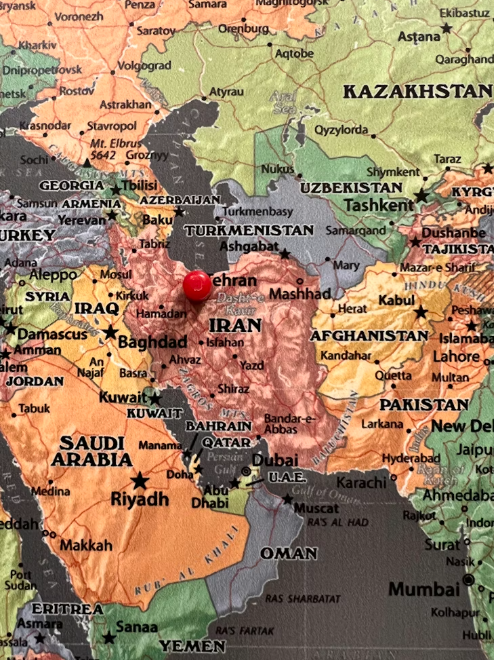
If you've been watching the news this week, you know that the U.S. and Israel launched military strikes against Iran on February 28th, Iran has been retaliating across the region, and the Middle East is currently in genuine chaos both on the ground and in the air. It is a serious and absolutely horrifying, confounding, infuriating, and fast-moving situation. Thousands of Americans are stranded across the region trying to get home.
And if you, your family, your friends, or all of the above have plans to travel to Europe in the near future, you may be asking yourself whether that trip should be canceled. So let's talk about that.
Is Europe safe right now?
Yes. Full stop. Western Europe is not a conflict zone, it is not in the line of fire, and there are no travel advisories for any of the countries you'd be visiting on a typical European trip like France, Italy, Spain, the UK, Ireland, Scotland, Portugal, Greece, and so on. The State Department's worldwide "exercise increased caution" alert is a blanket advisory they issue whenever there's a major global security event, and it is not the same as "don't go to Europe."
Europe is fine. Go to Europe.
What about Turkey (Türkiye)?
Türkiye is a fair bit more complicated than Western Europe.
The good news is that the big tourist areas of Istanbul, Cappadocia, the Aegean Coast, and Ephesus are in western and central Türkiye, which is geographically far from the conflict. Istanbul is over 1,200 miles from the Iranian border. Turkish airspace is open. Flights in and out of Istanbul are operating. The U.S. Embassy's current advisory for Türkiye is Level 2: Exercise Increased Caution, which is the same advisory Türkiye had before any of this happened.
The less good news: Türkiye shares its eastern land border with Iran, and the U.S. Embassy in Türkiye has specifically told American government personnel to avoid the Adana consular district… that's Türkiye’s 22 southeasternmost provinces, which border Iran, Iraq, and Syria. That's not tourist territory, but it's worth knowing. The Embassy is also advising Americans to avoid locations associated with the U.S. or Israel, stay away from protests, and keep a low profile. Standard heightened-alert stuff, but more pointed than usual.
Turkish Airlines has canceled flights to a long list of regional destinations such as Bahrain, Iran, Iraq, Jordan, Kuwait, Lebanon, Qatar, the UAE, and others, so if your itinerary connects through any of those, that's a problem. Istanbul to Western Europe, or direct from the U.S. to Istanbul, should be fine. Check your routing.
Bottom line on Türkiye: if you're going to Istanbul or the western coast, the situation is watchable but not alarming. Keep a close eye on travel advisories as this develops, make sure you have good travel insurance, and have a loose contingency plan. It's not the same as canceling a trip to Rome since there's more genuine uncertainty here, but honestly I would not say it's not a hard no yet.
Will my flights be affected?
Possibly, and this is the one genuinely practical concern. A lot of European airlines — including Lufthansa — route through Middle Eastern hubs like Dubai and Doha, and those hubs are either closed or operating in very limited capacity right now. If your itinerary has a connection through the Middle East, check with your airline immediately. You may be rerouted or delayed.
If you're flying direct from the U.S. to Europe on a carrier that doesn't route through the Middle East, which is most transatlantic routes, you should be largely unaffected. Still worth double-checking with your airline just to be sure, because the situation is changing daily.
What if things escalate further?
That's the honest unknown right now. The U.S. administration is pounding its chest and saying that the operation could last weeks, and administration officials have wildly mixed messages (or no messaging at all) about an exit strategy. If the conflict expands significantly, it could affect global aviation in ways that are hard to predict at this moment. Keep an eye on the State Department's travel advisory page (travel.state.gov) and sign up for STEP (the Smart Traveler Enrollment Program) which will push alerts directly to you if anything changes for your destination.
The bottom line
The Middle East is in crisis. Europe is not. If you have a trip to Italy or France or Scotland on the books, there is no reason to cancel it based on what's happening right now. Monitor your flight, check in with your airline, and keep an eye on the news, but don't let the chaos of a conflict happening thousands of miles from Paris talk you out of the trip you've been planning.
I'll update this as the situation develops.
Europe is Charging You Just to Show Up Now
Tourist taxes in some countries have been around for a while. But this year, they’re increasing in cost, being rolled out in new countries and towns around Europe, and formerly free sites now will cost you a samoleon or two. I’ll break down some of the costs, why they’re happening, and why I think they’re a good thing, actually.
Here's a thing that's been quietly happening across Europe and is about to get louder: tourist taxes.
They're not new. Italy and France have had them for years now. (And towns like Civita di Bagnoregio, the picturesque but crumbling Italian hill town that’s quietly slipping into the valley below, has a whole entry fee before you can cross the bridge.) But in 2026, a whole bunch of cities and countries are either introducing them for the first time or jacking up the rates they already had. And some of them are genuinely pretty significant.
Let’s break down the ones most likely to affect your trip.
Venice (Italy)
Venice's famous day-tripper fee is back for 2026, and it's expanded. If you're visiting Venice as a day trip — meaning you're not staying overnight — you'll need to pre-book and pay a €5 entry fee on about 60 designated peak days between April and July. (Fridays through Sundays, plus Italian holidays). Book at least four days in advance and it stays at €5. Show up without a booking and it's €10. Show up without paying at all and you're looking at a fine of up to €300. The good news: if you're actually staying overnight in Venice, you're exempt.
Barcelona (Spain)
Barcelona's city tourism surcharge went up to €5 per person per night in April 2026, and it's going to keep climbing. The city has a plan to raise it by €1 every year until it hits €8 in 2029. On top of that, there's a regional Catalan tax on top of the city tax. At a luxury hotel right now, you could be paying close to €15 per person per night in taxes alone. Which is a lot of cava, just saying.
Edinburgh (Scotland)
Edinburgh just became the first UK city to launch a visitor levy, which kicks in July 24, 2026: 5% of your pre-tax room rate, per night, for the first five nights of your stay. It then caps out, so longer stays get some relief. The money goes toward local infrastructure and cultural funding, which is a fine reason to charge it, but still.
Rome (Italy)
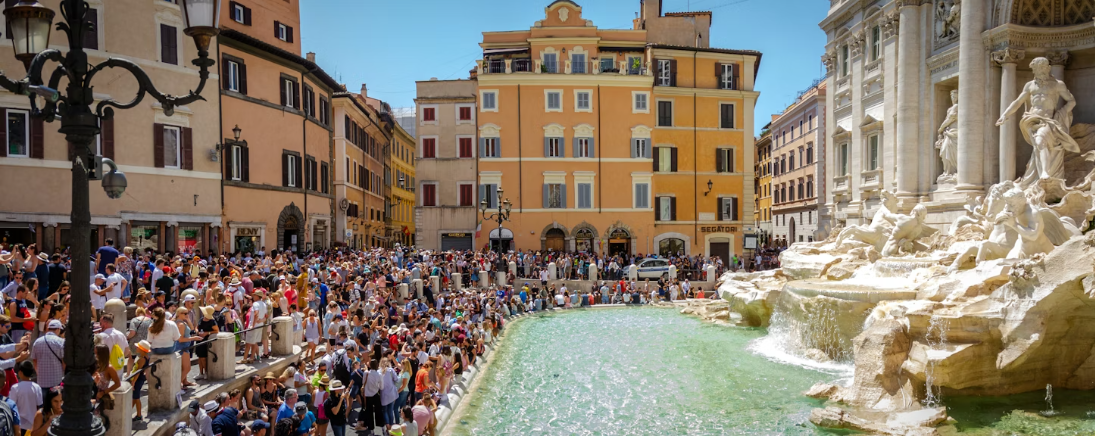
Rome has added something new and slightly cheeky for 2026: a €2 entry fee to get up close to the Trevi Fountain. You can still see it for free from a distance, but if you want to walk right up to it and toss your coin in and do the whole thing, that'll be €2. Locals are exempt. Tourists: pay up.
The big picture
I have to say, I, personally, fully support tourist taxes and things like the Trevi Fountain fee. The tourist crowds can be overwhelming, especially in the summertime. I think it’s long past time for cities to see some extra cashola from the crush. The tiny little piazza in front of the Trevi Fountain is basically impassable due to the hoardes of tourists from 10am - 10pm daily (approx.), and free access to the fountain has become a costly hazard. These fees and taxes are understandable, cheap enough to be fair, and will make a measurable difference in the care of these historic towns and attractions. IMNSHO.
None of these taxes or fees are trip-killers. Even stacked together, they're not going to dramatically change what a European trip costs. But they're worth knowing about, both so you're not surprised when it shows up on your bill, and so you can actually budget for them. The trend is clearly going in one direction (up), so this is not the last time we'll be talking about tourist taxes around here.
Europe wants your fingerprints now!! Yay?
The halcyon days of the passport stamp in Europe is nothing but a gauzy, cherished memory as European countries roll out their new Exit/Entry System, or EES. Find out the what, why, and how-much-time-is-this-going-to-take-me-NOW-dammit-at-passport-control.
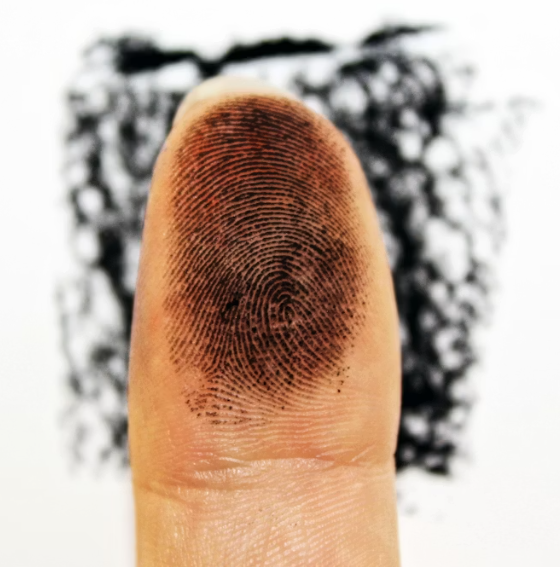
If you've traveled to Europe in the last few months, you may have noticed something new and slightly sci-fi happening at border control: a kiosk asking for your fingerprints and a photo of your face. Welcome to the EU's brand new Entry/Exit System — or EES — which quietly launched in October 2025 and is barreling toward full implementation by April 10, 2026.
Is it scary? No. Is it a little weird the first time? Absolutely.
So what the heck is EES?
The EES is Europe's new digital border system, and it replaces the old passport stamp with biometric data collection. Yes, the tattoo-worthy ink stamps you've been collecting since your first passport is a thing of the past and honestly I am very sad about it. But hey… progress! Or something! Anyways…
Now we're talking fingerprints (four of them) and a facial scan, registered the first time you enter the Schengen Area after the system is live. (The Schengen Area is a group of 29 European countries that share open borders. Once you're in, you move freely between member countries without passport checks. The area covers most of continental Europe, minus the UK and Ireland, plus a few non-EU countries like Switzerland and Norway.) After that initial registration, future crossings are just a quick biometric match. The whole point is to more accurately track who's in Europe, for how long, and to flag people who overstay the 90-days-in-180-days rule. The EU is also using it as a foundation for the upcoming ETIAS travel authorization system, which is expected to launch later in 2026 or possibly 2027. (More on that another time.)
Does it cost anything?
No. The EES itself is free. You do not pay for this. Don't let any third-party website tell you otherwise.
Will it cause delays?
Hoo boy, yes it can. The rollout has been… let's call it bumpy. Some airports have seen wait times increase significantly — up to 70% longer at some locations, according to airport industry groups — particularly when flights are stacked up and everyone needs to register for the first time at once. Some machines have crashed. Some border agents are still working out the kinks. Portugal even temporarily suspended the system at Lisbon Airport in December 2025 after widespread delays. The EU Commission says it's all going smoothly and that reports of multi-hour waits are exaggerated. Airport operators… disagree.
What does this mean for your trip?
For the near future, build in extra time at passport control. This is especially important if you're connecting through a European hub… give yourself a generous cushion. The good news: once you're registered in the system, subsequent trips will be faster. And by summer 2026, the kinks should be mostly worked out.
Also: your biometric data will be stored in an EU database for three years. Worth knowing.
The bottom line is that EES is happening whether we love it or not, and it'll be fully live by the time most of us are landing in Europe for summer travel. Just plan for some extra time at the border on your first trip through, and you'll be fine.
New Hop-On, Hop-Off Bus in Ireland!
Ireland has just announced an incredibly cool new Hop-On Hop-Off bus in County Clare! With seven different routes to choose from, taking you around the Burren, the Cliffs of Moher, Doolin, and points in between, this limited-run bus service is an absolute must-do!

It may seem weird to the uninitiated, but seasoned travelers like me LOVE a good Hop-On Hop-Off bus. Seriously. The one in London is chef’s kiss, the Paris bus is just fantastic, the Dublin bus is equally great. I could go on. I usually suggest it to my clients, since it’s just a good orientation—and super cheap, too.
Ireland has just announced a brand new Hop-On Hop-Off bus in a really unique area though: County Clare and all the wild majesty that entails! This new bus is a dream for folks who want to explore the Burren, the Cliffs of Moher, Doolin, and a host of other incredible sites.
The bus runs through the end of August with potential extensions into September, and this alone makes me want to hop on a plane to Ireland to explore all seven routes:
Miltown Malbay —> Lahinch —> Liscannor —> Cliffs of Moher Experience, and back again
This runs regularly throughout the day with stops along the route.
Kilfenora —> Lisdoonvarna —> Cliffs of Moher Experience, and back again
This route links the Burren villages to the Cliffs of Moher.
Doolin —> Cliffs of Moher Experience, and back again
This route is frequent service between Doolin and the Cliffs, which is awesome for combining a trip for some top trad (check out that alliteration) at a sweet pub in Doolin, then getting out to see the Cliffs.
Liscannor —> Cliffs of Moher, and back again
This is a wee route that runs about every 30 minutes between Liscannor and the Cliffs, but includes some of the most incredible scenery you’ll ever experience.
Ballyvaughan —> Aillwee Burren Experience —> Poulnabrone —> Caherconnell Stone Fort & Sheepdog Demonstraions —> Klifenora, and back again
This spectacular route links some of the Burren’s most incredible nature and its heritage, all in one bus ride.
Corofin —> Michael Cusack Centre —> Carran —> Slieve Carran —> Kilfenora, and back again
This route runs inland and includes incredible history combined with its top-notch walks. You can connect in Kilfenora to reach the Cliffs of Moher if you choose.
Corofin —> Burren National Park (Kenny’s Cross Trailhead [oh no! They killed Kenny!]), and back again
This is a dedicated shuttle into the heart of Burren National Park, which is ideal for spectacular walks on the marked trails of the Burren.
These busses are all free, but you will need to book in advance. Admission to the Cliffs of Moher Experience is also free when you use the shuttle bus.
Check out timetables, more route details, and how to book at the official Cliffs of Moher website, and get planning! The more interest there is, the more likely it is that this will continue into September so let’s get a-movin!
THE POPE HAS DIED: WHAT HAPPENS NOW
Pope Francis has died, and when a Pope dies, it invariably sets in motion a centuries-old series of events that, let’s face it, impact a trip of a lifetime to visitors of Rome. So if you’re in Rome, what happens now?

April 21 | 88 year old Pope Francis has died. It is a devastating blow to Catholics around the world, and invariably sets in motion a centuries-old series of events that, let’s face it, impact a trip of a lifetime to visitors of Rome (and other holy sites around the world). So if you’re in Rome, what happens now?
Step 1: Mourning
Every major Catholic church in the world now goes into mourning. This means that major churches around the world, such as Notre Dame in Paris, will close to tourism but remain open for reflective prayer, contemplation, and mass. Check with your tour operator if you have a tour of a major Catholic church in any city in the world if they have not contacted you yet. No doubt they’re swamped with work right now and may be slow to reach out with information, so please be understanding and patient. If you scheduled a dome climb at, for example, St Peter’s or the Duomo in Florence, check official websites for information. It’s likely those tourist activities will be canceled.
The Sistine Chapel will close one or two days after the Pope’s death to prepare for conclave (the election of the new Pope). The Vatican Museums should remain open, but check official websites to make sure.
The Pope’s earthly remains will lie in state in St. Peter’s Basilica. With it being the week after Easter, a Jubilee year, and the beginning of the high tourist season in Rome, expect wall-to-wall, shoulder-to-shoulder crowds.
Step 2: The Funeral
Four to five days after the Pope’s death, the funeral is held in St. Peter’s Basilica in Rome. The funeral will be attended by world leaders, so expect heavier security than usual and random closures around the Basilica.
After the funeral is the burial, which usually takes place in the crypts below St Peter’s but Pope Francis specifically requested he be buried in Santa Maria Maggiore. If you’re planning a visit to that church, be aware of random closures and increased security and restricted activity around the church, especially during the Pope’s funeral.
Step 3: The Conclave
Conclave, or the election of the new Pope, takes place 15 - 20 days after a pope dies. This takes place in the Sistine Chapel. During this period, cardinals are sequestered within the Vatican, and each day they vote for a new pope. This process can take a week or it can take a month… it just depends on how contentious the election is. Each evening after all voting has finished for the day, the conclave announces its progress to the public by way of either white or black smoke from the Sistine Chapel chimney, which can be seen from the Piazza San Pietro. Black indicates no new pope has been elected, white indicates a new pope has been elected.
Expect Piazza San Pietro to be absolutely packed with faithful, media, and onlookers all day every day. It will be an absolute madhouse, but it’s also history in the making. If I were in Rome during a new pope’s election, I would brave the crowds and check it out.
Step 4: Rome after Conclave
After the white smoke has been spotted, that evening the newly elected Pope will appear on a balcony above Piazza San Pietro to greet the faithful. Expect tourists to be restricted due to safety and security.
Immediately after conclave ends, the Sistine Chapel is cleared and cleaned and ready for visitors again. Expect at least two days of closure to remain after the end of conclave while they ready the chapel for the public.
After five or six days of ceremony and meetings after election, the new Pope is inaugurated in St. Peter’s, followed by a mass. The church and the piazza are closed to the public, and expect that closure to happen for at least an entire day. Check your tour operator or official websites for more information
And that’s a brief rundown of what to expect. Around Rome and in Catholic cathedrals around the world, expect church bells, mourning, celebrations, and random closures.
DO EUROPEANS REALLY HATE AMERICAN TRAVELERS?
Despite what you’ve read on social media, Europeans do NOT hate American tourists. Be a good tourist, and you’ll be treated well in return, I promise.

April 19 | One of the hottest trends on social media these days is Americans thinking they can’t travel anywhere outside the U.S. without a torrent of vitriol directed toward them due to the current administration’s outright hostility toward our once cherished allies.
But is this true? Do Europeans really hate us? Should we plaster Canadian flags all over our luggage to try to trick people into thinking we’re Canadian? Should we try speaking in a different accent? How should we act if someone confronts us?
Y’all, in the wise, immortal words of Holly Johnson, RELAX.
Do Europeans really hate us?
No. No they don’t. Europeans hate our government, and with good reason. But there is no hatred toward the average American tourist who is kind, respectful, learns at least a few words of the language, and keeps their damned voices down in public. In other words, Europeans don’t hate us because of our government, but they would (and do) hate us for being lousy travelers. So don’t be. And lay off the “jokes” about Canada or Greenland becoming part of the U.S. It’s not funny, it’s offensive af, and it’s trying to make light of deep, well-founded fear and anger that Denmark, Canada, and Greenland… and indeed all of the EU… is feeling right now. And tell your uncle to leave the red hat at home. Or better yet, stay home himself.
Should we pretend we’re from a different country to avoid issues?
Please NO, omg. Honestly there is so much wrong with that approach I don’t even know where to start. First of all, you’re not fooling anyone so just rid yourself of that thought right about yesterday. Second of all, Americans “pretending” to be Canadians by plastering maple leaves all over their backpacks is just so deeply offensive to a country that is right now being inexplicably targeted by their neighbor with the biggest and most lethal military in the world… you guys. Come on. Please don’t pour salt in the wound. You will be pegged as Americans immediately, so own it and double-down on being an excellent example of thoughtful and respectful tourists. You’ll quickly find that you’ll be rewarded with kindness and respect in return.
What if we’re confronted about our government’s actions?
Well then it’s a great way to start a dialogue. And chances are, you won’t be “confronted” the way we think of the word… rather, you may be politely asked for your thoughts. And feel free to be brutally honest. A shop keeper in Florence who spoke very little English recently put her question into Google translate to ask what I thought of the president. I Google translated back my answer, and we had a great chat about the situation.
Here’s the thing: Americans have some intense Main Character Energy. I say this with love but, stop thinking the world revolves around you. No one in Europe is going to be mad at you if you’re cool, I promise you that.
I will say that on a recent trip to Rome (and I found the same thing when I traveled around Europe during the George W Bush administration, though not as intensely) I was treated with probably more kindness, more empathy, and more sympathy than I expected. Europe is a collection of nations that have had to deal with variations of what we’re dealing with, or got too close for comfort to it, in their very recent past. And some European nations have some horrors in their past that they’re still trying to atone for to this day. They know exactly how it feels. While many folks may not understand the complexities of our system of government, they do understand not voting for something horrible but watching it unfold anyway. If someone asks you about our current political climate in the U.S., this is a great way to bond and share ideas.
The bottom line is: be a good tourist, and Europe will be good to you in return, no matter who is in the White House. They don’t hate you, I promise.
JUBILEE YEAR IN ROME
2025 is Jubilee year in Rome. What does it mean, why do they do it, and what can you expect when you travel there in 2025? I outline what it’s all about.

Yes yes yes, 2025 is Jubilee year in Rome. What does it mean, why do they do it, and what can you expect when you travel there in 2025?
What the heck is Jubilee?
The Jubilee year is declared by the Pope every 25 years. It’s a year-long celebration where Catholic pilgrims are welcomed into the city and into the Vatican for something called “plenary indulgence,” or kind of a blanket forgiveness of sins. Pope Boniface VIII declared the first Jubilee all the way back in the 14th century, and it’s been a thing every 33 or 25 years since. The idea dates back to the Bible and for Catholics, it represents a time of spiritual renewal.
What are some key things that happen during Jubilee year?
One of the coolest things to expect is the traditional opening of the Holy Doors. This happens at the churches of Saint Peter's Basilica, San Giovanni in Laterano, Santa Maria Maggiore, and San Paolo Fuori le Mura. These are special doors that are only opened on Jubilee years, expressly for the admittance of the faithful.
I’m traveling to Rome in 2025. What does it mean for me?
Well what it means is, in addition to the like 40 million visitors that usually descend on Rome, you can expect an additional approx. 35 million to flock to the city in search of enlightenment and forgiveness… or just spectacle. This means the major sites will be filled to capacity, restaurants will be short of reservations, tours will be to capacity, and short-term rentals and hotels will be maxed out. The places that do have availability will be priced accordingly. When looking for a hotel room for early April, I watched one room literally more than double its price half way through the week and on throughout the rest of the year.
Well shoot. What should I do?
If you haven’t already booked your flights and your accommodation, I would honestly postpone your trip until 2026, or choose other spots in Italy to visit that aren’t Rome… though honestly Florence and Venice will probably be more packed than normal with folks traveling there before or after Rome for Jubilee.
If you have already booked, seriously prepare and pace yourself. Get to “free” sites like the Trevi Fountain and the Spanish Steps at sunrise, and plan those walking food or cocktail or golf cart tours for as late in the evening as you can.
Do not plan to do more than one major site a day. The crowds will be merciless, as will the heat. If you’re doing the Colosseum, save the Vatican Museums (and only if you can get there right at opening or snag the very last tickets of the day… do NOT go at any other time unless you like conditions so crowded that it’s unsafe) for a different day, save the Pantheon for still a different day, etc.
Make your dinner reservations as early as humanly possible. During Jubilee year, it will become extremely difficult to just “walk into a place that looks cute.” Figure out where you want to go and make those reservations now.
Deep breaths and siestas. The Italians and the Spanish perfected the siesta, and during this Jubilee year, I suggest you do as they do. From around 1 or 2pm to around 5 or 6pm, retreat to your hotel or apartment. This is the absolute height of the insanity around the city, so get yourself well away from the crush. Read a book, take a nap, have a cool drink… whatever you can do to remove yourself.
And take lots of deep breaths. Don’t rush, give yourself plenty of time to get from point A to point B, and Rome will be as welcoming as ever.
ETIAS AND YOU
Starting in 2026 (allegedly), citizens from the U.S. will need an ETIAS — European Travel Information and Authorization System — to travel to Europe. It’s not a visa, and it’s not scary, I promise!

Who loves filling out more forms for travel? I do! I do!
Starting in 2026, citizens from the U.S. will need an ETIAS — European Travel Information and Authorization System — to travel to Europe.
ETA in the UK
As of January 8th of 2025, anyone traveling to the UK, even for a layover, needs an ETA. The process will be relatively the same as when the ETIAS comes on line… a £10 processing fee and a quick form, and you should be good to go within 24-48 hours. Apply here!
What is ETIAS?
The ETIAS is not a visa. Rather, it’s an “electronic entry-point, an authorization for countries that are currently visa-free,” according to Dan Hamilton from the Brookings Institute via NPR. It’s similar to to the ESTA (Electronic System for Travel Authorization) that the U.S. implemented in 2008 due to a fear of a rise in terrorism after 9/11. Basically, it’s to track who’s coming and who’s going to and from the EU. Kinda like those passenger tracking forms we all had to fill out just after countries had to open up again after the pandemic.
Who needs ETIAS?
All passport holders from 60 countries who travel to the EU without a visa will need an ETIAS. This includes Americans.
Where do I apply?
Once it’s open – and currently it is not, and no one knows when it will open for sure, so keep checking the site – you’ll apply via online form on the ETIAS website.
What do I need to apply?
There will be a €7 fee, you’ll be asked to fill out your date of birth, occupation, any criminal convictions, etc., and you’ll need your passport info. And make sure your passport is not set to expire within three months.
When do I apply?
Most applications will likely be processed immediately, but to be absolutely safe, give yourself at least a 30-day cushion between your application and your travel. Your ETIAS will remain valid for three years or until the passport you used in your application expires.
A timeframe for when you can actually apply for it and when it will go into effect has not been announced yet. So keep checking that ETIAS website to see when applications open! I would bet you one whole American dollar that your airline will let you know to apply if you’ve already bought plane tickets for 2026, like they did with COVID requirements. But to be on the safe side, keep an eye out and get ready to jump on it when it pops open!
We’ll be just fine, you guys. Just oooooone more thing, am I right?