The War in Iran: What it Means for Your Trip to Europe
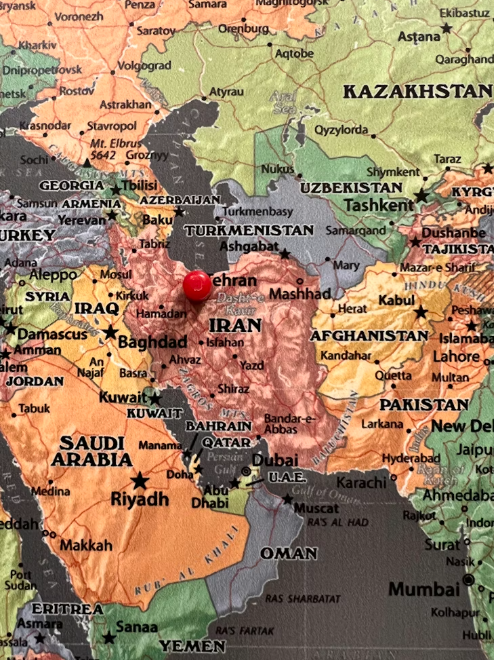
If you've been watching the news this week, you know that the U.S. and Israel launched military strikes against Iran on February 28th, Iran has been retaliating across the region, and the Middle East is currently in genuine chaos both on the ground and in the air. It is a serious and absolutely horrifying, confounding, infuriating, and fast-moving situation. Thousands of Americans are stranded across the region trying to get home.
And if you, your family, your friends, or all of the above have plans to travel to Europe in the near future, you may be asking yourself whether that trip should be canceled. So let's talk about that.
Is Europe safe right now?
Yes. Full stop. Western Europe is not a conflict zone, it is not in the line of fire, and there are no travel advisories for any of the countries you'd be visiting on a typical European trip like France, Italy, Spain, the UK, Ireland, Scotland, Portugal, Greece, and so on. The State Department's worldwide "exercise increased caution" alert is a blanket advisory they issue whenever there's a major global security event, and it is not the same as "don't go to Europe."
Europe is fine. Go to Europe.
What about Turkey (Türkiye)?
Türkiye is a fair bit more complicated than Western Europe.
The good news is that the big tourist areas of Istanbul, Cappadocia, the Aegean Coast, and Ephesus are in western and central Türkiye, which is geographically far from the conflict. Istanbul is over 1,200 miles from the Iranian border. Turkish airspace is open. Flights in and out of Istanbul are operating. The U.S. Embassy's current advisory for Türkiye is Level 2: Exercise Increased Caution, which is the same advisory Türkiye had before any of this happened.
The less good news: Türkiye shares its eastern land border with Iran, and the U.S. Embassy in Türkiye has specifically told American government personnel to avoid the Adana consular district… that's Türkiye’s 22 southeasternmost provinces, which border Iran, Iraq, and Syria. That's not tourist territory, but it's worth knowing. The Embassy is also advising Americans to avoid locations associated with the U.S. or Israel, stay away from protests, and keep a low profile. Standard heightened-alert stuff, but more pointed than usual.
Turkish Airlines has canceled flights to a long list of regional destinations such as Bahrain, Iran, Iraq, Jordan, Kuwait, Lebanon, Qatar, the UAE, and others, so if your itinerary connects through any of those, that's a problem. Istanbul to Western Europe, or direct from the U.S. to Istanbul, should be fine. Check your routing.
Bottom line on Türkiye: if you're going to Istanbul or the western coast, the situation is watchable but not alarming. Keep a close eye on travel advisories as this develops, make sure you have good travel insurance, and have a loose contingency plan. It's not the same as canceling a trip to Rome since there's more genuine uncertainty here, but honestly I would not say it's not a hard no yet.
Will my flights be affected?
Possibly, and this is the one genuinely practical concern. A lot of European airlines — including Lufthansa — route through Middle Eastern hubs like Dubai and Doha, and those hubs are either closed or operating in very limited capacity right now. If your itinerary has a connection through the Middle East, check with your airline immediately. You may be rerouted or delayed.
If you're flying direct from the U.S. to Europe on a carrier that doesn't route through the Middle East, which is most transatlantic routes, you should be largely unaffected. Still worth double-checking with your airline just to be sure, because the situation is changing daily.
What if things escalate further?
That's the honest unknown right now. The U.S. administration is pounding its chest and saying that the operation could last weeks, and administration officials have wildly mixed messages (or no messaging at all) about an exit strategy. If the conflict expands significantly, it could affect global aviation in ways that are hard to predict at this moment. Keep an eye on the State Department's travel advisory page (travel.state.gov) and sign up for STEP (the Smart Traveler Enrollment Program) which will push alerts directly to you if anything changes for your destination.
The bottom line
The Middle East is in crisis. Europe is not. If you have a trip to Italy or France or Scotland on the books, there is no reason to cancel it based on what's happening right now. Monitor your flight, check in with your airline, and keep an eye on the news, but don't let the chaos of a conflict happening thousands of miles from Paris talk you out of the trip you've been planning.
I'll update this as the situation develops.